Hot Wheels Christmas Cars: The Complete Guide to Holiday Castings Most Collectors Forget
Every holiday season, Mattel drops a new batch of Christmas-themed Hot Wheels. Every year, most collectors walk right past them. Maybe it is the candy-cane stripes. Maybe it is the idea that a car with a Santa graphic is not a serious piece. Here is the thing, though: these holiday castings have quietly become one of the most interesting and overlooked corners of the hobby. Some are tough to find. Some have wild paint. Some are mail-ins that took proofs of purchase and a lot of patience. This guide sets the record straight.
Why Christmas Cars Get Ignored (And Why That Is a Mistake)
Let us be honest. For years, holiday cars were peg warmers. They sat there well into February, and you could usually find them discounted at big-box stores after the new year. Collectors chasing Treasure Hunts and store exclusives did not give them a second look. But that attitude misses what makes them special. Christmas cars are a time capsule. They capture a specific year, a specific design trend, and often a specific retail promotion. And because so many were bought as gifts and opened by kids, carded examples in nice shape keep getting harder to find. That supply squeeze is exactly what makes a niche interesting.
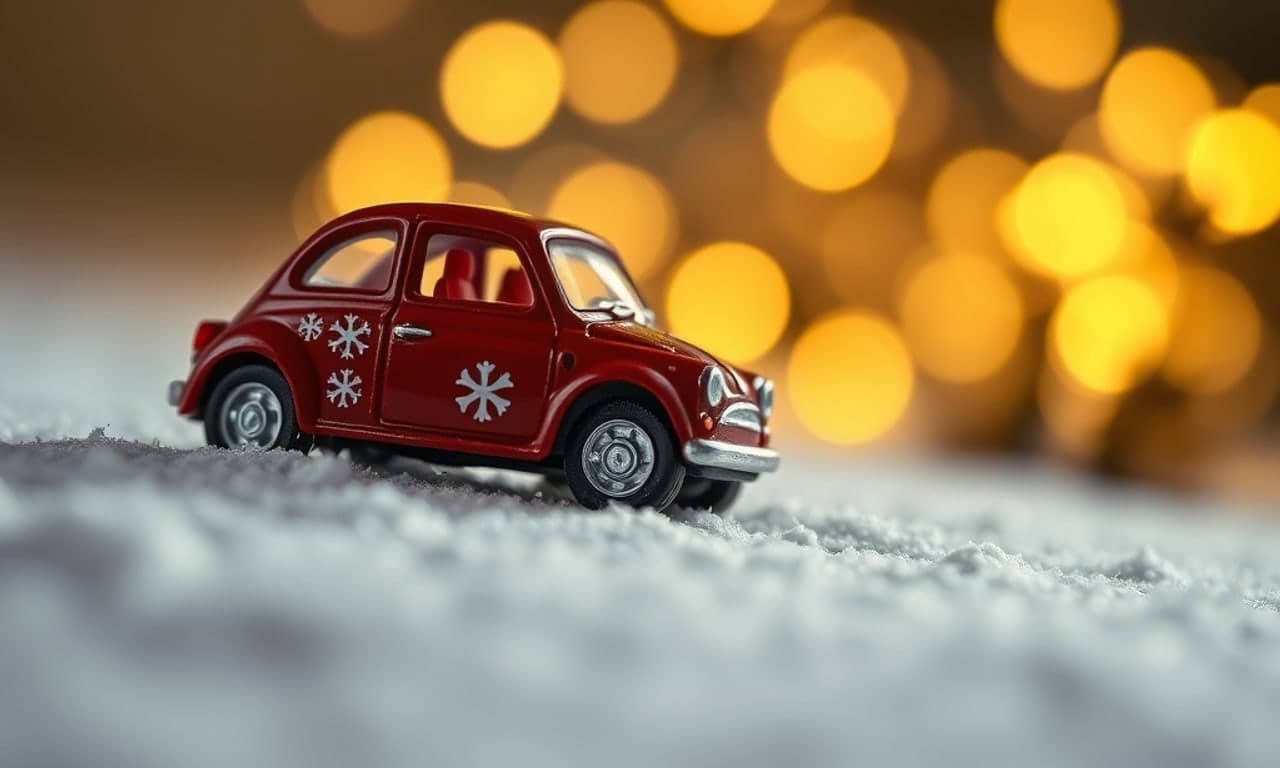
There is also the design angle. Holiday castings often get paint schemes and graphics that would never fly on a mainline. Snowflake tampos. Reindeer on the doors. A full-on North Pole livery. Some of these are genuinely clever. Others are gloriously cheesy. Either way, they stand out in a display case. In a hobby where every other car has flames or racing stripes, standing out counts for something.
The Major Categories of Hot Wheels Christmas Cars
Not all Christmas cars are created equal. They come through a few different channels, and knowing which is which helps you know what you are looking at.
Retail Holiday Mainlines
These are the ones you see in the seasonal aisle at major retailers. Usually mainline castings with festive deco, sometimes in a special holiday blister or a slightly different card. They are not rare in the traditional sense, but they are produced in smaller numbers than standard mainlines, and non-collectors often buy them as stocking stuffers. So finding a mint carded example a few years later can be trickier than you would expect. The cards get bent, the blisters get crushed, and plenty end up in the trash by January.
Mail-In and Promotional Holiday Cars
This is where it gets serious. Mattel has run holiday mail-in promotions over the years, often requiring receipts or card backs from specially marked products. These cars are produced in far lower numbers than retail holiday mainlines, and they usually come in a plain white mailer box or a special baggie. Since they were never on a peg, most casual collectors never see them. A carded or bagged mail-in Christmas car with the original paperwork is a real collectible. Condition matters enormously here. Creased cards, missing mailers, or loose examples all take a big bite out of value.
Red Editions and Store Exclusives
Target Red Editions have become a whole sub-hobby of their own, and holiday-themed Red Editions are among the most sought after. The red paint and red card are a natural fit for Christmas, and Mattel has leaned into that. They are exclusive to one retailer, so distribution is limited and peg hunting is the only way to find them at retail. If you see a holiday Red Edition hanging on a peg in December, grab it. You may not see another one.
Pop Culture and Special Series Holiday Cars
Every few years, Mattel releases a dedicated holiday series, sometimes under the Pop Culture banner or as a special themed set. These often feature premium materials like metal bases and Real Riders wheels, and they come in nicer packaging. They are aimed at adult collectors, and they tend to sell out fast. The quality is usually a step above the retail holiday mainlines, and the designs are more ambitious.
What to Look For When Buying Christmas Cars
If you are going to collect these, you need to know what separates a nice example from a great one. Here is our short list.
-
Card condition: Holiday cards are often brightly colored and show wear easily. Look for sharp corners, no creases, and no price stickers. A clean card can double the value of a common car.
-
Blister seal: The plastic bubble should be firmly attached with no lifting or yellowing. Holiday blisters sometimes have special shapes or printing, and damage is common because these cars get handled a lot in stores.
-
Paint and tampos: Check for misaligned tampos, which are common on holiday graphics. A perfectly centered snowflake or Santa graphic is worth a premium to variant hunters.
-
Wheels: Many holiday mainlines use basic plastic wheels, but some premium versions have Real Riders. Know which is which before you pay a premium.
-
Completeness: For mail-ins and special series, make sure you get the mailer, the paperwork, or the outer box. These extras are often lost and are hard to replace.
Collector tip: When you find a holiday car on the pegs, check the case code on the box if you can. Holiday assortments often ship in mixed cases, and knowing the code helps you date the car and confirm it is from the correct year.
The Ones That Got Away: Notable Rarities
Every niche has its unicorns, and Christmas cars are no exception. We are not naming specific years here, because records vary and Mattel does not always document these releases clearly. But these are the types that consistently command attention.
First, early mail-in holiday cars from the 1990s and early 2000s. These were produced in small numbers and many were opened and played with. Carded examples are scarce. Second, any holiday car with a production error, like a missing tampo or a wrong-color base. Error collectors pay real money for those. Third, retailer exclusives that were only available in certain regions. Distribution for holiday exclusives can be spotty, and a car that was common in one part of the country may be nearly impossible to find in another.
We track as many of these as we can in our catalog, but the reality is that information on holiday releases is often incomplete. Mattel does not always publish production numbers, and many were never formally announced. That is part of the fun. It is also part of the frustration.
How to Store and Display Your Christmas Cars
Holiday cars are tricky to store because many collectors want to display them seasonally. If you collect carded, protect those cards. Use rigid card savers or top loaders, and keep them out of direct sunlight. The red and green inks on holiday cards fade faster than you might think. If you display them, try a shadow box or a themed shelf you rotate in December. For loose collectors, a small case with compartments works well and keeps tampos from rubbing against each other.
One more thing: humidity. Carded cars stored in damp basements or garages will develop rust on the axles and discoloration on the cards. Keep them in a climate-controlled space. Basic advice, sure. But it is amazing how many nice holiday cars get ruined by a leaky storage bin.
Frequently Asked Questions
Are Hot Wheels Christmas cars worth collecting? Yes, especially the mail-in and retailer exclusive versions. They are produced in lower numbers than standard mainlines, and carded examples in good condition are getting harder to find. Even common holiday mainlines have a place in a themed collection.
How can I tell if a Christmas car is rare? Look for mail-in packaging, retailer exclusives like Red Editions, and low production numbers. Also check for errors and variants. Our price history and community forums can help you gauge demand, but always do your own research on specific releases.
Should I open my Christmas cars? That depends on your goals. If you are collecting for value, keep them carded and protected. If you want to display them, loose cars can look great in a holiday display. Just remember that once opened, the value drops significantly for rare pieces.